Buy quereinsteiger.eu ?
We are moving the project
quereinsteiger.eu .
Are you interested in purchasing the domain
quereinsteiger.eu ?
domain@kv-gmbh.de · 0541-91531010
Buy quereinsteiger.eu ?
What does 'Körper 10048' mean?
'Körper 10048' is a German phrase that translates to 'Body 10048' in English. It refers to a specific body or individual identified by the number 10048. This phrase could be used in various contexts, such as in a medical setting to refer to a patient or in a research study to identify a subject. **
What does body 10048 mean?
Body 10048 is a unique identifier used in the context of computer programming or data management. It could refer to a specific record, file, or entity within a system. The number 10048 is likely assigned to distinguish this particular body from others and facilitate organization and retrieval of information. The exact meaning of body 10048 would depend on the specific system or database in which it is used. **


Similar search terms for KAWE-10048-Pilot-bearing
Top-Angebote
Products related to KAWE-10048-Pilot-bearing:
-
KAVO PARTS WBK-10048 Wheel bearing kitWidth [mm]: 48; Inner Diameter [mm]: 30; Outer Diameter [mm]: 62; Required quantity: 2; Brake Type: Drum Brake; Construction Year from: 12/2010, 12/2019, 12/2018; Braking/Driving Dynamics: for vehicles with ABS; Wheelbase: for shortened wheelbase; for model code/type code: KSOL, KSOM, JSAJ, JSAL, KW0G, KW0V, KW0L, KW0K, K8MP, K8MG, K8J3, FEJB, KEJB, FEM3, KEM3; Construction Year to: 02/2017, 09/2019; for model code: JSAJ, JSAL, KW0K, KEM3; Fitting Position: Rear Axle; Transmission Type: 6-Speed Manual Transmission, 6-Speed Automatic Transmission, 5-Speed Manual Transmission, 5-Speed Automatic Transmission; Rim Size [inch]: 15.0, 16.0, 17.0; Rim Size [inch]: 15, 16, 17; Shock Absorber System: Normal Suspension; Vehicle Equipment: for vehicles with reinforced shock absorbers; Suspension: for vehicles with lifted suspension; Engine Code: H5F 403, K9K 646, H5F 408, H5F 412; TecDoc Engine Number: 34151, 38780; for OE number: 432103106R29,49 £*Shipping: 8,45 £Secure redirect to the provider
-
BLUE PRINT ADC43399 Pilot bearing, clutchBearing Type: Angular Ball Bearing; for OE number: MH040024; Observe service information: ; Construction Year to: 07/2001; not for vehicle equipment line/trim level: L-Line; Construction Year from: 11/2009; TecDoc Engine Number: 2354, 30760; Vehicle Equipment Line/Trim Level: Hi-Rider; Engine Code: 6G729,29 £*Shipping: 8,45 £Secure redirect to the provider
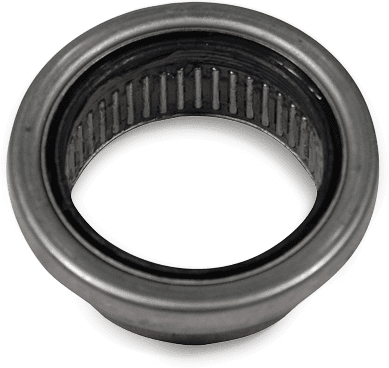
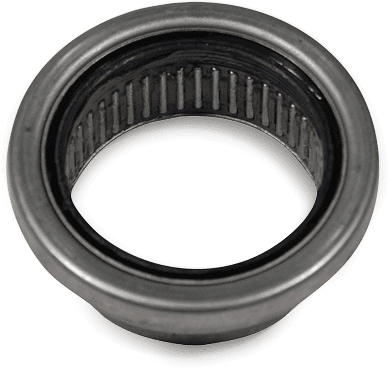


-
After pilot training, who becomes the captain or co-pilot?
After pilot training, the most common path to becoming a captain or co-pilot is to gain experience as a first officer, also known as a co-pilot. First officers typically accumulate flight hours and experience working alongside a captain before being promoted to the role of captain. This progression allows pilots to develop the necessary skills and knowledge to safely and effectively operate as the pilot in command of an aircraft. **
-
How does one become a police pilot and then transition to become an ADAC pilot?
To become a police pilot, one typically needs to have a commercial pilot's license, as well as experience in law enforcement or a related field. They may also need to complete specialized training in aerial law enforcement tactics and procedures. To transition to become an ADAC pilot, one would need to gain experience in emergency medical services (EMS) and potentially obtain additional certifications or training specific to flying for medical transport. This could include training in advanced life support techniques, patient care, and aviation safety protocols for medical missions. Additionally, having experience in flying helicopters and a strong understanding of navigation and flight planning would be beneficial for transitioning to become an ADAC pilot. **
-
How can one cut a bearing, if one has a two-way bearing without bearing force?
If one has a two-way bearing without bearing force, it can be cut by using a cutting tool such as a saw or a grinder. The cutting tool should be used to carefully cut through the outer ring of the bearing, being cautious not to damage the inner components. It is important to wear protective gear and work in a well-ventilated area when cutting a bearing to ensure safety. Additionally, it may be helpful to seek guidance from a professional or refer to the manufacturer's instructions for specific guidance on cutting the particular type of bearing. **
-
Is it a load-bearing or non-load-bearing wall?
Without further information or context, it is impossible to determine if the wall in question is load-bearing or non-load-bearing. Load-bearing walls are designed to support the weight of a structure, while non-load-bearing walls are primarily used for dividing spaces and do not support structural weight. It is important to consult a structural engineer or building professional to assess the specific characteristics of the wall in question to determine its load-bearing capacity. **


How do you reinstall a hub bearing or ball bearing?
To reinstall a hub bearing or ball bearing, you will need to first clean the bearing housing and apply a thin layer of grease to the inside of the housing. Next, carefully place the bearing back into the housing, making sure it is properly aligned. Use a bearing press or a socket and hammer to gently tap the bearing into place until it is fully seated. Finally, reassemble the rest of the components in the correct order and torque the axle nut to the manufacturer's specifications. **
How long does pilot training take?
Pilot training can take anywhere from 6 months to several years, depending on the type of pilot license being pursued and the individual's schedule and pace of learning. For a private pilot license (PPL), it typically takes around 6-12 months of part-time training. For a commercial pilot license (CPL), it can take 18-24 months of full-time training. Additional training and experience may be required for specific endorsements or ratings, such as instrument rating or multi-engine rating. Overall, the length of pilot training can vary based on the individual's commitment, the flight school's program, and the specific aviation career goals. **
Top-Angebote
Products related to KAWE-10048-Pilot-bearing:
-
KAWE 10037 Pilot bearing, clutchParameter: LL; Outer Diameter 1 [mm]: 24; Width [mm]: 16; Inner Diameter [mm]: 18; Construction Year to: 12/1987, 07/1989, 07/1986; Construction Year from: 01/1988, 01/1985; Engine Number to: 049108, 001281, 002861; Vehicle Identification Number (VIN) to: K#150000; TecDoc Engine Number: 331, 937514,99 £*Shipping: 8,45 £Secure redirect to the provider
-
What does 'Körper 10048' mean?
'Körper 10048' is a German phrase that translates to 'Body 10048' in English. It refers to a specific body or individual identified by the number 10048. This phrase could be used in various contexts, such as in a medical setting to refer to a patient or in a research study to identify a subject. **
-
What does body 10048 mean?
Body 10048 is a unique identifier used in the context of computer programming or data management. It could refer to a specific record, file, or entity within a system. The number 10048 is likely assigned to distinguish this particular body from others and facilitate organization and retrieval of information. The exact meaning of body 10048 would depend on the specific system or database in which it is used. **
-
After pilot training, who becomes the captain or co-pilot?
After pilot training, the most common path to becoming a captain or co-pilot is to gain experience as a first officer, also known as a co-pilot. First officers typically accumulate flight hours and experience working alongside a captain before being promoted to the role of captain. This progression allows pilots to develop the necessary skills and knowledge to safely and effectively operate as the pilot in command of an aircraft. **
-
How does one become a police pilot and then transition to become an ADAC pilot?
To become a police pilot, one typically needs to have a commercial pilot's license, as well as experience in law enforcement or a related field. They may also need to complete specialized training in aerial law enforcement tactics and procedures. To transition to become an ADAC pilot, one would need to gain experience in emergency medical services (EMS) and potentially obtain additional certifications or training specific to flying for medical transport. This could include training in advanced life support techniques, patient care, and aviation safety protocols for medical missions. Additionally, having experience in flying helicopters and a strong understanding of navigation and flight planning would be beneficial for transitioning to become an ADAC pilot. **
Similar search terms for KAWE-10048-Pilot-bearing
-
KAVO PARTS WBK-10048 Wheel bearing kitWidth [mm]: 48; Inner Diameter [mm]: 30; Outer Diameter [mm]: 62; Required quantity: 2; Brake Type: Drum Brake; Construction Year from: 12/2010, 12/2019, 12/2018; Braking/Driving Dynamics: for vehicles with ABS; Wheelbase: for shortened wheelbase; for model code/type code: KSOL, KSOM, JSAJ, JSAL, KW0G, KW0V, KW0L, KW0K, K8MP, K8MG, K8J3, FEJB, KEJB, FEM3, KEM3; Construction Year to: 02/2017, 09/2019; for model code: JSAJ, JSAL, KW0K, KEM3; Fitting Position: Rear Axle; Transmission Type: 6-Speed Manual Transmission, 6-Speed Automatic Transmission, 5-Speed Manual Transmission, 5-Speed Automatic Transmission; Rim Size [inch]: 15.0, 16.0, 17.0; Rim Size [inch]: 15, 16, 17; Shock Absorber System: Normal Suspension; Vehicle Equipment: for vehicles with reinforced shock absorbers; Suspension: for vehicles with lifted suspension; Engine Code: H5F 403, K9K 646, H5F 408, H5F 412; TecDoc Engine Number: 34151, 38780; for OE number: 432103106R29,49 £*Shipping: 8,45 £Secure redirect to the provider
-
BLUE PRINT ADC43399 Pilot bearing, clutchBearing Type: Angular Ball Bearing; for OE number: MH040024; Observe service information: ; Construction Year to: 07/2001; not for vehicle equipment line/trim level: L-Line; Construction Year from: 11/2009; TecDoc Engine Number: 2354, 30760; Vehicle Equipment Line/Trim Level: Hi-Rider; Engine Code: 6G729,29 £*Shipping: 8,45 £Secure redirect to the provider
-
JP GROUP 1110452702 Pilot bearing, clutchWidth [mm]: 23,5; Bearing Type: Needle Bearing; Inner Diameter [mm]: 15; for PR number: G1C, G1A, G1D, G0R, G0K, G0L, G0C, 0EG, 0IJ; Transmission Type: 7-Speed Dual-Clutch Transmission, 6-Speed Automatic Transmission, Dual-Clutch Transmission, 6-Speed Manual Transmission, 6-Speed Dual-Clutch Transmission, 7-Speed Automatic Transmission, 5-Speed Manual Transmission, for 7-speed automatic transmission; Engine Code: CMXA, CCSA, CAVG,CTHG, CAVG, CTHG, BGU, BSE, BSF, AXX, BPY, BWA, CAWB, CBFA, CCZA, CCTA, BMN, CNEA, DCYB, CRBC, CRLB, DCYA, DEJA, DFGA, CLRA, CKFC, CHHB, CNTC, CXDA, CHHA, CHPA, CRUA, DBGA, CUNA, CZDA, CZEA, CUNA, DGCA, CNTA, CHPB, CZCA, DFEA, CUWA, CXEB, CXXB, CUVC, DFLA, CXFA, CXHA, DFFA, DTTA, DTTC, DNUE, DJHA, DDYA, DGTA, DSRA, DSRB, DTSA, DTSB, CHZL, DKLA, DLAC, DXTA, CHZJ, DKJA, DKRF, DXUA, DUSA, DPCA, DFYA, DGEA, DNFF; TecDoc Engine Number: 24313, 22665, 23937, 16871, 20711, 20712, 17450, 19199, 20704, 20714, 22170, 22663, 18471, 18245, 18246, 18541, 20732, 20795, 18222, 18223, 20780, 20710, 24325, 27196, 27202, 32774, 34063, 34412, 27078, 27197, 27976, 31415, 35413, 27977, 26724, 26725, 29213, 33133, 33136, 33137, 28035, 29242, 29249, 29285, 27858, 29248, 31777, 30259, 31317, 31357, 31372, 31428, 33097, 31318, 31329, 33070, 44687, 45210, 36213, 34399, 33476, 39183, 39184, 40475, 40476, 34874, 36992, 40415, 45771, 34933, 34950, 36358, 45772, 34965, 45117, 33895, 44646, 44680, 50810, 44304, 38450, 38451, 39967, 44059, 45057, 47555; Transmission Code: DSG, S tronic; Construction Year from: 05/2017, 01/2019, 08/2022, 01/2022; Number of Gears: 7 Speed; Model Year from: 2017; Production date to: 20.09.2021, 02.01.2022; Construction Year to: 10/2021; for combined PR number: 0IJ+G1C13,49 £*Shipping: 8,45 £Secure redirect to the provider
-
MAXGEAR 61-0106 Pilot bearing, clutchWidth [mm]: 26; Outer Diameter [mm]: 24; Inner Diameter [mm]: 15; Bearing Type: Needle Bearing; Construction Year from: 01/1988, 08/1991; TecDoc Engine Number: 9375, 13930, 13931, 13932, 4197, 9516, 15808, 16259, 11888, 10813, 17164, 13439, 15340, 15312, 17034, 17033, 15346, 11498, 15155, 16422, 15617, 16367, 16252, 15331, 16859, 16860, 13444, 9522; Engine Number from: 049109; Transmission Type: Manual Transmission, 6-Speed Manual Transmission, 5-Speed Manual Transmission8,59 £*Shipping: 8,45 £Secure redirect to the provider
-
How can one cut a bearing, if one has a two-way bearing without bearing force?
If one has a two-way bearing without bearing force, it can be cut by using a cutting tool such as a saw or a grinder. The cutting tool should be used to carefully cut through the outer ring of the bearing, being cautious not to damage the inner components. It is important to wear protective gear and work in a well-ventilated area when cutting a bearing to ensure safety. Additionally, it may be helpful to seek guidance from a professional or refer to the manufacturer's instructions for specific guidance on cutting the particular type of bearing. **
-
Is it a load-bearing or non-load-bearing wall?
Without further information or context, it is impossible to determine if the wall in question is load-bearing or non-load-bearing. Load-bearing walls are designed to support the weight of a structure, while non-load-bearing walls are primarily used for dividing spaces and do not support structural weight. It is important to consult a structural engineer or building professional to assess the specific characteristics of the wall in question to determine its load-bearing capacity. **
-
How do you reinstall a hub bearing or ball bearing?
To reinstall a hub bearing or ball bearing, you will need to first clean the bearing housing and apply a thin layer of grease to the inside of the housing. Next, carefully place the bearing back into the housing, making sure it is properly aligned. Use a bearing press or a socket and hammer to gently tap the bearing into place until it is fully seated. Finally, reassemble the rest of the components in the correct order and torque the axle nut to the manufacturer's specifications. **
-
How long does pilot training take?
Pilot training can take anywhere from 6 months to several years, depending on the type of pilot license being pursued and the individual's schedule and pace of learning. For a private pilot license (PPL), it typically takes around 6-12 months of part-time training. For a commercial pilot license (CPL), it can take 18-24 months of full-time training. Additional training and experience may be required for specific endorsements or ratings, such as instrument rating or multi-engine rating. Overall, the length of pilot training can vary based on the individual's commitment, the flight school's program, and the specific aviation career goals. **
* All prices are inclusive of VAT and, if applicable, plus shipping costs. The offer information is based on the details provided by the respective shop and is updated through automated processes. Real-time updates do not occur, so deviations can occur in individual cases. ** Note: Parts of this content were created by AI.