Buy quereinsteiger.eu ?
We are moving the project
quereinsteiger.eu .
Are you interested in purchasing the domain
quereinsteiger.eu ?
domain@kv-gmbh.de · 0541-91531010
Buy quereinsteiger.eu ?
What is Disjoint?
Disjoint refers to two or more sets that have no elements in common. In other words, the intersection of disjoint sets is an empty set. For example, if set A = {1, 2, 3} and set B = {4, 5, 6}, then A and B are disjoint sets because they do not share any elements. Disjoint sets are often used in mathematics and statistics to analyze relationships between different groups or categories. **
Are complementary events disjoint?
Complementary events are not necessarily disjoint. Complementary events are two events that together cover all possible outcomes of an experiment. Disjoint events, on the other hand, are events that have no outcomes in common. While complementary events are mutually exclusive, they can still have some outcomes in common, unlike disjoint events. **
Similar search terms for Disjoint
Top-Angebote
Products related to Disjoint:
-
John Murray Press Opportunity: Seize The Day. Win At Life. by Rob Moore - Business & Personal Development Paperback - UK EditionOpportunity: Seize The Day. Win At Life. is a practical guide from bestselling author and entrepreneur Rob Moore, designed to help readers spot, create and capitalise on opportunities in business and life. Rather than waiting for a lucky break, Moore shows how to train your mind to recognise openings others miss, act decisively, and build lasting momentum. Packed with real-world strategies, this book is a motivating read for anyone wanting to take control of their future in career, business or personal growth. Written by Rob Moore and published by John Murray Press, this book is a valuable resource for those looking to make a positive change in their lives.3,99 £*Shipping: 2,99 £Secure redirect to the provider
-
Learning Resources All About Me Family Counters Set of 72 - 72 Colorful Counters for Early Math Skills and Social Skills DevelopmentIntroducing the Learning Resources All About Me Family Counters Set of 72, a fun and educational tool designed to spark imagination and creativity in young learners. This vibrant set features a delightful array of family members, including parents, grandparents, and children, ideal for counting, sorting, and imaginative play. The set includes 72 colorful counters that are perfectly sized for little hands, making learning engaging and fun. The counters promote early math skills by encouraging counting, patterning, and sorting through playful activities. They also help develop social skills by fostering conversations about family dynamics and relationships. The All About Me Family Counters are suitable for a variety of settings, including home play, classroom activities, and birthday gifts. They are a great addition to any toy collection.19,19 £*Shipping: 3,95 £Secure redirect to the provider
-
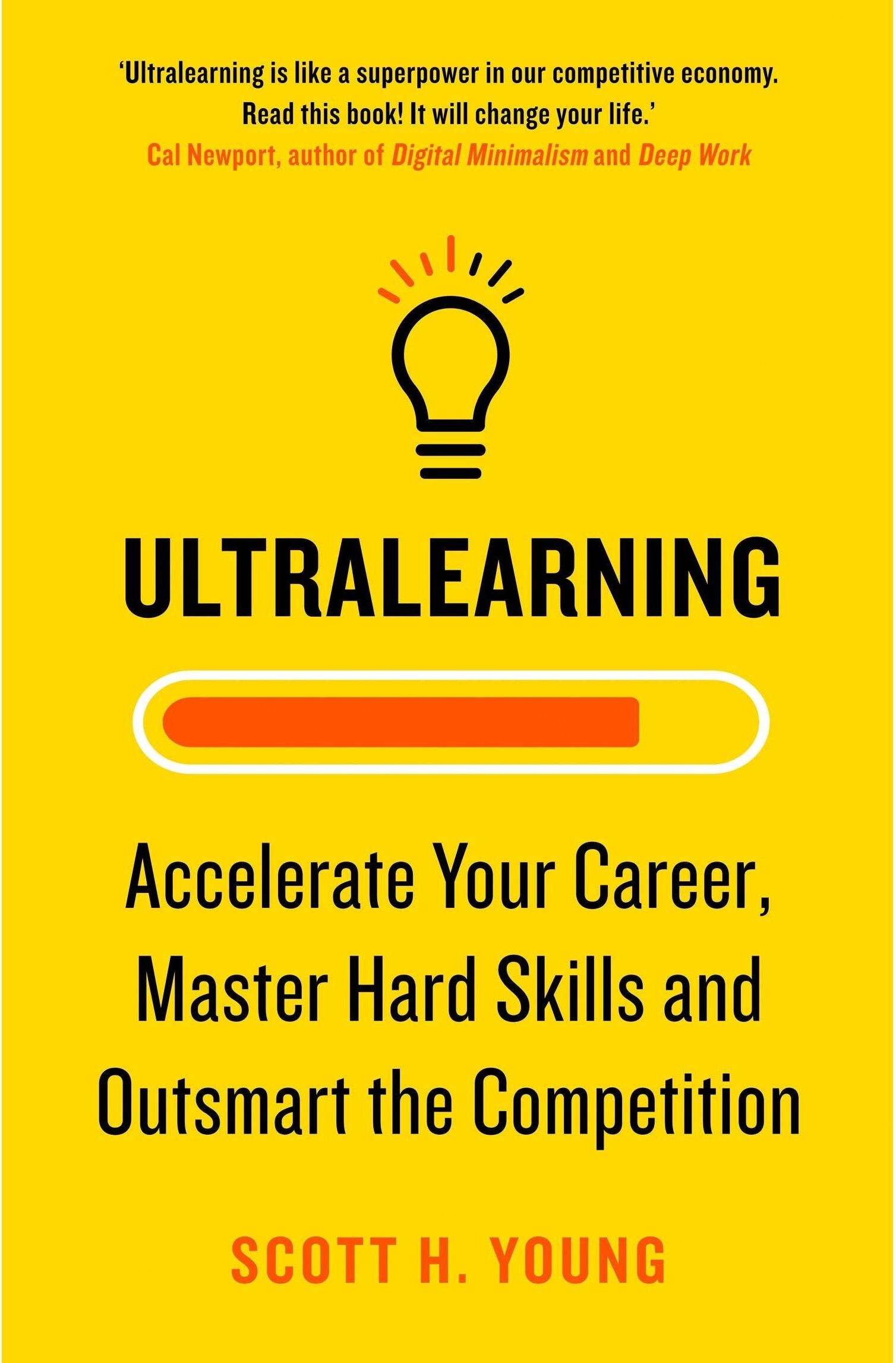
Thorsons Ultralearning: Accelerate Your Career, Master Hard Skills and Outsmart the CompetitionFuture-proof your career and maximize your competitive advantage by learning the skill necessary to stay relevant, reinvent yourself, and adapt to whatever the workplace throws your way in this essential guide. Faced with tumultuous economic times and rapid technological change, staying ahead in your career depends on continual learning―a lifelong mastery of new ideas, subjects, and skills. If you want to accomplish more and stand apart from everyone else, you need to become an ultralearner. Scott Young incorporates the latest research about the most effective learning methods and the stories of other ultralearners like himself―among them Ben Franklin, Judit Polgar, and Richard Feynman, as well as a host of others, such as little-known modern polymaths like Nigel Richards who won the World Championship of French Scrabble―without knowing French. Young documents the methods he and others have used and shows that, far from being an obscure skill limited to aggressive autodidacts, ultralearning is a powerful tool anyone can use to improve their career, studies, and life. Ultralearning explores this fascinating subculture, shares the nine principles behind every successful ultralearning project, and offers insights into how you can organize and execute a plan to learn anything deeply and quickly, without teachers or budget-busting tuition costs. Whether the goal is to be fluent in a language (or ten languages), earn the equivalent of a college degree in a fraction of the time, or master multiple skills to build a product or business from the ground up, the principles in Ultralearning will guide you to success.8,99 £*Shipping: 2,99 £Secure redirect to the provider
-
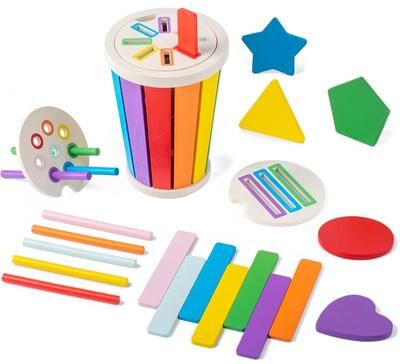
Youfap Market Montessori Wooden Shape Sorting Toy For Toddlers, Color Matching & Fine Motor Skills Development aGive your toddler a head start in learning with this Montessori wooden shape sorting toy. Designed for young learners, it helps build fine motor skills through colorful and interactive matching games. Perfect for kids ages 3 and up, this educational...64,97 $*Shipping: 0,00 $Secure redirect to the provider


-
What are disjoint subsets?
Disjoint subsets are subsets of a larger set that have no elements in common. In other words, if two subsets are disjoint, it means that there is no element that is present in both subsets. For example, if we have a set A = {1, 2, 3} and two subsets B = {1, 2} and C = {3, 4}, then B and C are disjoint subsets because they do not share any common elements. **
-
Is independent the same as disjoint?
No, independent and disjoint are not the same. In probability theory, two events are considered independent if the occurrence of one event does not affect the probability of the other event occurring. On the other hand, two events are considered disjoint (or mutually exclusive) if they cannot both happen at the same time. In other words, if one event occurs, the other event cannot occur simultaneously. **
-
Are coin tosses generally disjoint and independent?
Coin tosses are generally considered to be independent events, meaning the outcome of one coin toss does not affect the outcome of another. Each coin toss has a 50% chance of landing on heads or tails, regardless of previous tosses. However, coin tosses are not disjoint events because they can both result in the same outcome (e.g. both heads or both tails). **
-
What is a question about disjoint cycles in permutations?
A question about disjoint cycles in permutations could be: "How can we determine the order of a permutation given its disjoint cycle representation?" This question involves understanding how to calculate the order of a permutation by finding the least common multiple of the lengths of its disjoint cycles. It also requires knowledge of how to express a permutation as a product of disjoint cycles and how to identify the cycle structure of a permutation. **

Why are the two events in probability theory not disjoint?
The two events in probability theory are not disjoint because they can have outcomes that overlap or have elements in common. Disjoint events, also known as mutually exclusive events, have no outcomes in common and cannot occur simultaneously. However, in the case of non-disjoint events, there is a possibility of shared outcomes or elements, allowing both events to occur at the same time. This distinction is important in probability theory as it affects the calculation of probabilities and the understanding of the relationship between different events. **
When are the kernel and image of vector spaces disjoint?
The kernel and image of a linear transformation on a vector space are only disjoint when the transformation is injective, meaning it has a trivial kernel (containing only the zero vector). In this case, the only vector that maps to the zero vector in the image is the zero vector itself, so the kernel and image have no non-zero vectors in common. In all other cases, there will be non-zero vectors in the kernel that also belong to the image, making the kernel and image not disjoint. **
Top-Angebote
Products related to Disjoint:
-
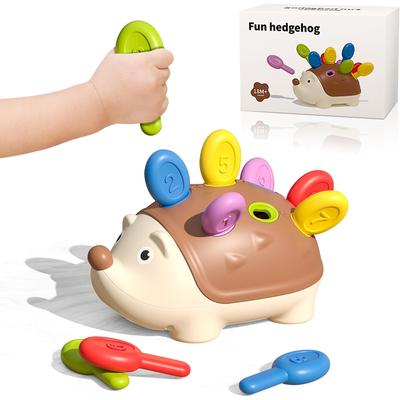
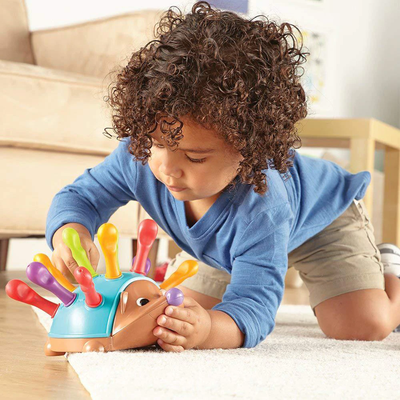
Tiny Tots Teens Trends Montessori Educational Toy, Hedgehog Fine Motor Skills, Toddler Counting, Sensory Development Montessori Educational Toy, Hedgehog Fine Motor Skills, Toddler Counting, Sensory DevelopmentHedgehog Montessori Educational Toy is a delightful and engaging learning tool designed to help toddlers develop essential fine motor skills, improve their concentration, and enhance sensory development. This toy promotes handson learning through...59,97 $*Shipping: 0,00 $Secure redirect to the provider
-
Playful Picks Montessori Hedgehog Color Sorting Educational Toddler Toy For Fine Motor Skills Development Montessori Hedgehog Color Sorting Educational Toddler Toy For Fine Motor Skills DevelopmentTurn early learning into a joyful daily adventure with a toy designed to spark curiosity and growth. The Montessori hedgehog toy is thoughtfully created for toddlers aged 13, helping them explore colors, counting, and coordination through handson...24,97 $*Shipping: 0,00 $Secure redirect to the provider
-
John Murray Press Opportunity: Seize The Day. Win At Life. by Rob Moore - Business & Personal Development Paperback - UK EditionOpportunity: Seize The Day. Win At Life. is a practical guide from bestselling author and entrepreneur Rob Moore, designed to help readers spot, create and capitalise on opportunities in business and life. Rather than waiting for a lucky break, Moore shows how to train your mind to recognise openings others miss, act decisively, and build lasting momentum. Packed with real-world strategies, this book is a motivating read for anyone wanting to take control of their future in career, business or personal growth. Written by Rob Moore and published by John Murray Press, this book is a valuable resource for those looking to make a positive change in their lives.3,99 £*Shipping: 2,99 £Secure redirect to the provider
-
Learning Resources All About Me Family Counters Set of 72 - 72 Colorful Counters for Early Math Skills and Social Skills DevelopmentIntroducing the Learning Resources All About Me Family Counters Set of 72, a fun and educational tool designed to spark imagination and creativity in young learners. This vibrant set features a delightful array of family members, including parents, grandparents, and children, ideal for counting, sorting, and imaginative play. The set includes 72 colorful counters that are perfectly sized for little hands, making learning engaging and fun. The counters promote early math skills by encouraging counting, patterning, and sorting through playful activities. They also help develop social skills by fostering conversations about family dynamics and relationships. The All About Me Family Counters are suitable for a variety of settings, including home play, classroom activities, and birthday gifts. They are a great addition to any toy collection.19,19 £*Shipping: 3,95 £Secure redirect to the provider
-
What is Disjoint?
Disjoint refers to two or more sets that have no elements in common. In other words, the intersection of disjoint sets is an empty set. For example, if set A = {1, 2, 3} and set B = {4, 5, 6}, then A and B are disjoint sets because they do not share any elements. Disjoint sets are often used in mathematics and statistics to analyze relationships between different groups or categories. **
-
Are complementary events disjoint?
Complementary events are not necessarily disjoint. Complementary events are two events that together cover all possible outcomes of an experiment. Disjoint events, on the other hand, are events that have no outcomes in common. While complementary events are mutually exclusive, they can still have some outcomes in common, unlike disjoint events. **
-
What are disjoint subsets?
Disjoint subsets are subsets of a larger set that have no elements in common. In other words, if two subsets are disjoint, it means that there is no element that is present in both subsets. For example, if we have a set A = {1, 2, 3} and two subsets B = {1, 2} and C = {3, 4}, then B and C are disjoint subsets because they do not share any common elements. **
-
Is independent the same as disjoint?
No, independent and disjoint are not the same. In probability theory, two events are considered independent if the occurrence of one event does not affect the probability of the other event occurring. On the other hand, two events are considered disjoint (or mutually exclusive) if they cannot both happen at the same time. In other words, if one event occurs, the other event cannot occur simultaneously. **
Similar search terms for Disjoint
-
Thorsons Ultralearning: Accelerate Your Career, Master Hard Skills and Outsmart the CompetitionFuture-proof your career and maximize your competitive advantage by learning the skill necessary to stay relevant, reinvent yourself, and adapt to whatever the workplace throws your way in this essential guide. Faced with tumultuous economic times and rapid technological change, staying ahead in your career depends on continual learning―a lifelong mastery of new ideas, subjects, and skills. If you want to accomplish more and stand apart from everyone else, you need to become an ultralearner. Scott Young incorporates the latest research about the most effective learning methods and the stories of other ultralearners like himself―among them Ben Franklin, Judit Polgar, and Richard Feynman, as well as a host of others, such as little-known modern polymaths like Nigel Richards who won the World Championship of French Scrabble―without knowing French. Young documents the methods he and others have used and shows that, far from being an obscure skill limited to aggressive autodidacts, ultralearning is a powerful tool anyone can use to improve their career, studies, and life. Ultralearning explores this fascinating subculture, shares the nine principles behind every successful ultralearning project, and offers insights into how you can organize and execute a plan to learn anything deeply and quickly, without teachers or budget-busting tuition costs. Whether the goal is to be fluent in a language (or ten languages), earn the equivalent of a college degree in a fraction of the time, or master multiple skills to build a product or business from the ground up, the principles in Ultralearning will guide you to success.8,99 £*Shipping: 2,99 £Secure redirect to the provider
-
Youfap Market Montessori Wooden Shape Sorting Toy For Toddlers, Color Matching & Fine Motor Skills Development aGive your toddler a head start in learning with this Montessori wooden shape sorting toy. Designed for young learners, it helps build fine motor skills through colorful and interactive matching games. Perfect for kids ages 3 and up, this educational...64,97 $*Shipping: 0,00 $Secure redirect to the provider
-
Inspire Picks Interactive Giraffe Suction Cup Toy Multifunctional Sensory Learning And Motor Skills Development Toy whistleEncourage handson learning and playful discovery with this interactive giraffe toy designed for growing minds. Featuring a strong suction cup base, it easily attaches to smooth surfaces for stable, engaging play at home or on the go. Made from safe,...34,93 $*Shipping: 0,00 $Secure redirect to the provider
-
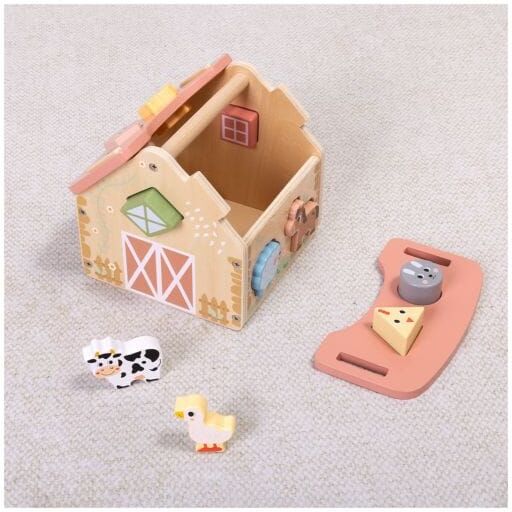
Tooky Toys Wooden Shape Sorter Barn - Toddler Toy for 3-4 Years - Fine Motor Skills DevelopmentWooden shape sorter barn designed for toddlers to practice spatial reasoning and fine motor control. Made from dense hardwood with sanded edges and low-VOC treatment. Includes chunky geometric blocks sized for small-hand grip strength. Each slot aligns with a specific block shape, reducing slippage. Smooth finish wipes clean after crayon marks or snack spills. Sturdy frame maintains integrity through stacking and drops. Reinforces visual discrimination and geometry vocabulary.11,29 £*Shipping: 3,95 £Secure redirect to the provider
-
Are coin tosses generally disjoint and independent?
Coin tosses are generally considered to be independent events, meaning the outcome of one coin toss does not affect the outcome of another. Each coin toss has a 50% chance of landing on heads or tails, regardless of previous tosses. However, coin tosses are not disjoint events because they can both result in the same outcome (e.g. both heads or both tails). **
-
What is a question about disjoint cycles in permutations?
A question about disjoint cycles in permutations could be: "How can we determine the order of a permutation given its disjoint cycle representation?" This question involves understanding how to calculate the order of a permutation by finding the least common multiple of the lengths of its disjoint cycles. It also requires knowledge of how to express a permutation as a product of disjoint cycles and how to identify the cycle structure of a permutation. **
-
Why are the two events in probability theory not disjoint?
The two events in probability theory are not disjoint because they can have outcomes that overlap or have elements in common. Disjoint events, also known as mutually exclusive events, have no outcomes in common and cannot occur simultaneously. However, in the case of non-disjoint events, there is a possibility of shared outcomes or elements, allowing both events to occur at the same time. This distinction is important in probability theory as it affects the calculation of probabilities and the understanding of the relationship between different events. **
-
When are the kernel and image of vector spaces disjoint?
The kernel and image of a linear transformation on a vector space are only disjoint when the transformation is injective, meaning it has a trivial kernel (containing only the zero vector). In this case, the only vector that maps to the zero vector in the image is the zero vector itself, so the kernel and image have no non-zero vectors in common. In all other cases, there will be non-zero vectors in the kernel that also belong to the image, making the kernel and image not disjoint. **
* All prices are inclusive of VAT and, if applicable, plus shipping costs. The offer information is based on the details provided by the respective shop and is updated through automated processes. Real-time updates do not occur, so deviations can occur in individual cases. ** Note: Parts of this content were created by AI.